

There's a particular kind of fear that comes from watching someone you love struggle to breathe, and it doesn't fade even after the moment passes. Parents of children with food allergies describe a constant background hum of vigilance, reading every label twice, quizzing school staff on emergency procedures, and packing an auto-injector into every bag before leaving the house. Adults living with their own severe allergies often describe a similar toll: hesitating over restaurant menus, avoiding social events built around food, or feeling isolated by a risk most people around them don't fully understand. The unpredictability is what wears people down most. A reaction can be mild one time and life-threatening the next, and that uncertainty makes it nearly impossible to ever fully relax.
Most families first encounter this fear reactively rather than proactively, after a first reaction sends them to urgent care or the ER, often followed by a prescription for antihistamines and a vague instruction to watch for anything worse. That approach treats the immediate symptom but rarely equips patients with a real understanding of anaphylaxis symptoms or a documented plan for handling a future reaction. Many patients cycle through this pattern more than once, treating each event in isolation, before someone finally asks the more important question: what is actually causing these reactions, and how do we prevent the next one from becoming an emergency? That question is what typically brings patients to a specialist rather than another urgent care visit.
This is precisely where allergy specialty care changes the trajectory. At Cure Allergy Clinic, Dr. M. Waseem Imam and his team don't just treat the reaction after it happens, they work to identify the exact trigger through precise diagnostic testing, then build a written action plan that covers medication, dosing, and exactly when to use an epinephrine auto-injector versus when antihistamines are sufficient. That level of preparation, paired with ongoing management for the underlying allergy, is what gives DFW families the confidence to stop simply reacting to emergencies and start preventing them.
Recognizing Anaphylaxis Symptoms Early
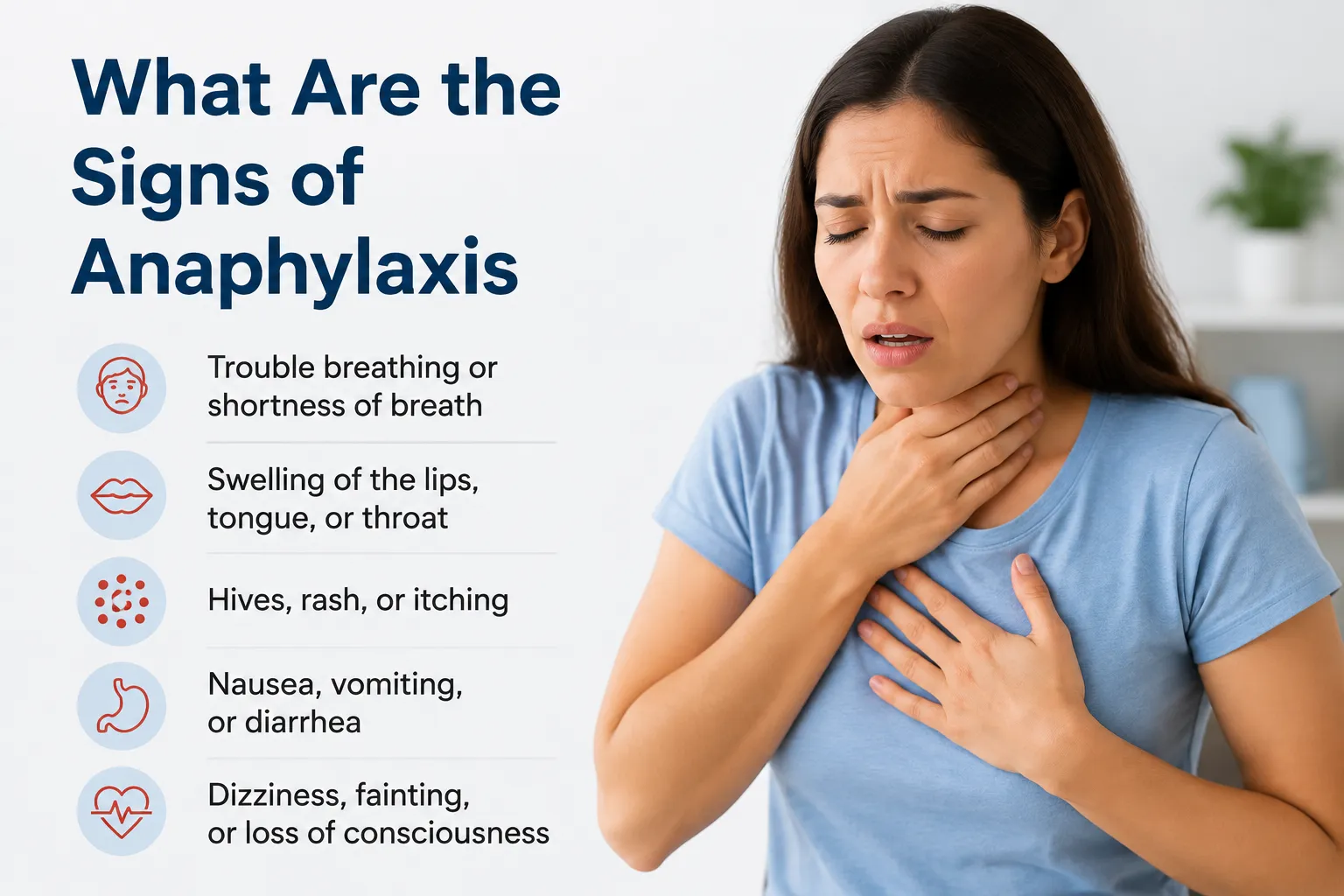
Anaphylaxis is a severe, whole-body allergic reaction that can escalate within minutes, which is why recognizing the earliest signs matters as much as knowing what to do once symptoms are severe. It typically involves more than one body system at once, skin, respiratory, gastrointestinal, or cardiovascular, which is one of the key features that separates it from a milder, localized allergic reaction.
Anaphylaxis in Children Looks Different
Recognizing anaphylaxis in children can be more difficult than in adults, since young kids often can't articulate symptoms like throat tightness or a feeling of impending doom, both of which are common in adult anaphylactic reactions. Instead, parents and caregivers should watch for behavioral changes, sudden clinginess, unusual quietness, or a child suddenly becoming difficult to console, alongside physical signs like drooling, voice changes, or refusing to swallow. Because children's airways are smaller, swelling that might feel mild in an adult can progress to serious obstruction much faster in a young child, which makes early recognition and prompt treatment even more critical.
How to Use an Epinephrine Auto-Injector
Once anaphylaxis is suspected, epinephrine is the first-line treatment, and delaying its use to see if symptoms improve is one of the most common and dangerous mistakes patients make. Antihistamines and inhalers may ease some symptoms, but they do not stop the progression of true anaphylaxis, and relying on them alone can cost precious time during a rapidly escalating reaction.
A written action plan from your allergist removes the guesswork from this process, spelling out exactly which symptoms warrant epinephrine versus which can be monitored with antihistamines, so caregivers and patients aren't making that call for the first time in the middle of a crisis.
Identifying and Managing the Underlying Trigger
Treating a reaction after it happens is only half the picture. The more important long-term work is identifying exactly what's causing the reactions in the first place, since guessing at triggers leaves patients exposed to repeat emergencies. Comprehensive allergy testing can pinpoint specific food or environmental triggers with far more precision than trial-and-error elimination diets, which often leave families avoiding foods unnecessarily while missing the actual culprit.
Food allergies are among the most common triggers for severe reactions, and understanding the 8 major food allergens is a useful starting point, though reactions to less obvious foods do happen and are frequently overlooked until testing confirms them. For patients managing an ongoing food allergy, a personalized management plan should cover avoidance strategies, medication protocols, and a clear understanding of cross-contamination risks in restaurants and shared kitchens.
For families interested in reducing reaction risk over time rather than only managing it reactively, treatment approaches offered through the clinic's food allergy program are designed to gradually build tolerance under close medical supervision, giving many patients a meaningfully different long-term outlook than avoidance alone.
Building a Long-Term Safety Plan
Beyond identifying triggers and having epinephrine on hand, an effective long-term plan addresses the practical realities of daily life. Coordinating with schools, workplaces, and caregivers on emergency protocols reduces the chance that a reaction goes unrecognized or mismanaged by someone unfamiliar with the patient's history. Reviewing medication expiration dates regularly matters too, since an expired auto-injector delivers a reduced dose and shouldn't be relied on in an emergency. Patients on other prescriptions should also have their full medication list reviewed periodically through medication management to ensure nothing interacts poorly with emergency treatment or daily allergy control.
Living with the risk of anaphylaxis doesn't have to mean living in a constant state of alert. With an accurate diagnosis, a clear action plan, and an epinephrine auto-injector you know how to use with confidence, the unpredictability that defines life before diagnosis starts to fade. Dr. Imam and the team at Cure Allergy Clinic have guided countless DFW families through exactly this transition, from reactive emergency management to a proactive, well-understood plan. If you or your child has experienced a severe allergic reaction, or you're carrying an auto-injector without fully understanding your specific triggers, a thorough evaluation can replace fear with a plan you actually trust.
Disclaimer
This content is provided for educational purposes only and does not constitute medical advice. It is not a substitute for consultation with a qualified healthcare provider. If you or someone else is experiencing a severe allergic reaction, call 911 immediately. Treatment recommendations vary based on individual medical history, so always follow the personalized action plan provided by your allergist.