

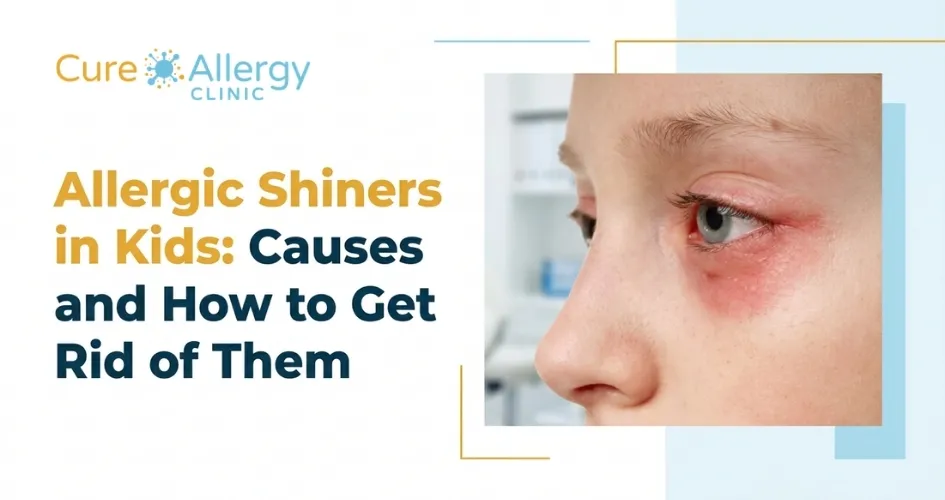
Dark circles under a child’s eyes can be mistaken for bruising or lack of sleep. Allergic shiners are another possible explanation, and they come from a congested nose. That is why allergic shiners treatment is aimed at the nose and the allergy behind it rather than at the skin.
To help you tell which one your child has, this guide covers what shiners look like, how to tell them apart from a bruise or tired eyes, which allergens tend to cause them in North Texas, and what treatment involves for children of different ages.
What Are Allergic Shiners?
Allergic shiners are dark, painless circles under both eyes caused by nasal congestion from allergies. They usually fade once the congestion is treated, though this can take a few weeks, and they tend to return if the allergy flares again.
The name comes from the look: the skin under the eyes may turn blue, gray, purple, or brown, a bit like a black eye. That color comes from small veins under the eyes, which drain through the area around the nose. When the nasal lining is swollen, blood moves through those veins more slowly and collects there. The skin in that spot is thin, so the pooled blood shows through as a shadow, sometimes with puffiness.
Children get them often, and the congestion behind them is easy to miss. A young child may not blow their nose well and can live with a stuffy nose for months without mentioning it.
What Causes Allergic Shiners in Kids?
Anything that keeps a child’s nose congested for a long stretch can cause allergic shiners. Common allergy triggers in North Texas include:
Dust mites. They live in pillows, mattresses, and stuffed animals and cause symptoms all year.
Pollen. Trees in spring, grasses in summer, and ragweed in fall can bring shiners back each season.
Pet dander. Cats and dogs can be a bigger problem when they sleep on your child’s bed.
Mold. Damp spots indoors, plus outdoor mold after rain or in wet leaf piles.
Allergies are not the only cause of dark circles. Colds, sinus infections, enlarged adenoids, eczema, short sleep, and family traits can all play a part. When the circles come with a runny or stuffy nose, sneezing, or itchy eyes, allergies move higher on the list, and an exam can help sort out the rest.
How Do You Know It Is Allergies and Not a Bruise?
Allergic shiners appear under both eyes, do not hurt, and last as long as the congestion does. A bruise is usually on one side, feels tender, and changes color as it heals over a week or two.
You may notice other allergy clues at the same time:
The allergic salute. Your child pushes the tip of the nose upward with the palm to ease itching.
A nasal crease. Frequent rubbing can leave a faint line across the lower part of the nose.
Dennie Morgan lines. Extra folds of skin under the lower eyelids.
Mouth breathing and snoring. A blocked nose pushes your child to breathe through the mouth, especially at night.
This table puts shiners, a bruise, and tired eyes side by side.
| Sign | Allergic shiners | Bruise | Tired eyes |
|---|---|---|---|
| Location | Both eyes | Usually one eye | Both eyes |
| Pain | None | Tender | None |
| Other symptoms | Stuffy nose, sneezing, itchy eyes | Recent bump or fall | Improve after good sleep |
| How long it lasts | As long as congestion lasts | About 1 to 2 weeks | Short term |
What Is the Best Allergic Shiners Treatment?
The most useful treatment clears the nasal congestion by treating the allergy that causes it. No cream or quick allergic shiners cure works on the dark color itself, because the color reflects what is happening inside the nose.
Finding that allergy comes first. Dr. M. Waseem Imam sees children with ongoing congestion and dark circles as part of our pediatric and adult allergy care, and a visit starts with a look at your child’s symptoms, when they happen, and what is in the home.
Allergy testing
Testing can help identify which allergens your child reacts to, and the results are read together with the symptom history. A skin prick test takes about 20 minutes, and the results are usually discussed at the same appointment. For very young children, a blood test may suit better. Our guide to allergy testing for kids in Dallas explains what the appointment looks like.
Medicine matched to your child’s age
Medicine can help control the congestion while you work on the triggers. Options include non drowsy antihistamines, steroid nasal sprays, antihistamine eye drops, and saline nasal rinses. Not every medicine is approved for every age, so check with your child’s doctor before starting one. Our parent guide on allergy medicine for children and what is safe by age goes into more detail.
Fewer allergens at home
Lowering allergen exposure at home can also ease the congestion. Start with the bedroom. Put dust mite covers on the pillow and mattress, wash bedding weekly in hot water, and keep pets out of the room. On high pollen days, keep windows closed and run a HEPA filter. You can find more ideas in our tips on how to allergy proof your bedroom.
Immunotherapy for allergies that keep returning
If your child’s allergies come back every season or never fully clear, immunotherapy works to make the immune system react less over time. CureSLIT sublingual allergy drops are needle free and taken at home. Allergy shots are another option, and your allergist can talk through which one suits your child.
How to Get Rid of Allergic Shiners Faster at Home
While the allergy is being treated, a cool compress can ease puffiness. Wrap a cold pack or a bag of frozen peas in a thin towel and hold it gently under the eyes for a few minutes. Saline rinses, enough water, and raising the head of the bed slightly can also help the nose drain.
Concealer and eye creams only work on the surface, so they do not change the cause. They may cover the color for a school photo, but the shadows usually return until the congestion is under control.
Do Allergic Shiners Go Away?
Allergic shiners usually go away once the congestion clears, often over a few weeks of treatment. As the area settles, the color can shift from purple toward yellow or brown before it fades. Without treatment, they may stay until the allergy season ends and then return with the next exposure.
When Should Your Child See an Allergist?
Book an evaluation if the dark circles stay for several weeks, come back every season, or show up with snoring, mouth breathing, restless sleep, or a nose that is stuffy most days. It also makes sense to come in if nonprescription medicine is not helping or you are unsure which medicine is safe for your child’s age.
At the visit, the team goes over your child’s symptoms, sleep, and home, and testing may follow if it can help find the trigger. Parents who prefer to talk through their child’s symptoms in Spanish or Arabic can ask for a team member who speaks their language.
Families can bring children to our Arlington pediatric allergy clinic, which serves Grand Prairie and Irving as well. Farther north, Keller allergy care for kids is on Davis Blvd. To the south, our Mansfield children’s allergy office is on Fountainview Dr.
When Dark Circles Come With a Stuffy Nose Most Days
If your child’s shiners keep returning along with congestion, snoring, or mouth breathing, testing can point to the allergen involved, and treatment can then be chosen for their age.
Book your allergy evaluation or call (817) 678 5575.
Serving Arlington, Keller, Mansfield, and the greater Dallas Fort Worth area.
About Dr. M. Waseem Imam: Dr. M. Waseem Imam, DO, FACAAI, founded Cure Allergy Clinic and serves as its Chief Medical Officer. He is board certified in adult and pediatric Allergy and Immunology.
Medical Disclaimer
This blog is for informational and educational purposes only and does not constitute medical advice.