

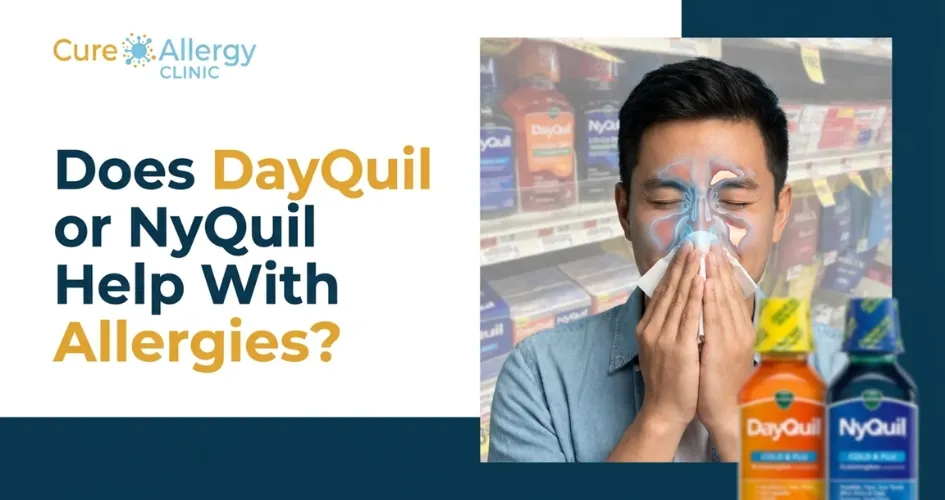
Does DayQuil help with allergies? Not much, and the ingredient list shows why. DayQuil Cold and Flu contains acetaminophen, dextromethorphan, and phenylephrine, and none of them is an antihistamine, the type of medicine that eases sneezing, itching, and a runny nose. NyQuil Cold and Flu replaces phenylephrine with doxylamine, a sedating antihistamine, so it may calm a runny nose at night, but it also gives you a pain reliever and a cough suppressant you may not need.
Medicines made for allergies are a better fit, because they treat allergy symptoms without those extras. Non drowsy antihistamines target sneezing and itch, and a daily nasal steroid spray targets congestion. If you need medicine for weeks at a time, allergy testing can show what you are reacting to.
What Is in the Bottle?
DayQuil and NyQuil are cold and flu medicines, so their ingredients target infection symptoms such as pain, fever, cough, and congestion. Only NyQuil contains an antihistamine, and it is a sedating one. Formulas differ between versions, such as Severe or Cough products, so read the label on the box you have.
| Product | Active ingredients | Helps allergies? |
|---|---|---|
| DayQuil Cold and Flu | Acetaminophen, dextromethorphan, phenylephrine | Little to none; no antihistamine |
| NyQuil Cold and Flu | Acetaminophen, dextromethorphan, doxylamine | Partly, but very drowsy |
| Non drowsy antihistamine | Cetirizine, loratadine, or fexofenadine | Yes, for sneezing, itch, runny nose |
| Nasal steroid spray | Fluticasone or similar | Yes, especially for congestion |
Acetaminophen relieves pain and fever, and dextromethorphan suppresses a cough. Allergies do not cause fever and rarely cause body aches, so with either product you would be taking a pain reliever your allergies do not call for. Matching the medicine to your symptoms is the better approach, and our page on allergy medicines and follow up care explains how the clinic helps patients choose and adjust allergy medicine.
Does DayQuil Help With Allergies?
DayQuil does little for allergies because nothing in it blocks histamine. Histamine is the chemical behind sneezing, itchy eyes, and a dripping nose, and without an antihistamine those symptoms stay as they are.
Phenylephrine, the decongestant, is the ingredient that might seem useful for a stuffy nose. In 2023, an FDA advisory committee unanimously concluded that oral phenylephrine at the standard dose does not work as a nasal decongestant. After that review, in November 2024, the FDA proposed removing oral phenylephrine from over the counter decongestants. That proposal is not final yet: as of October 2026, the FDA lists it as a proposed order. It also does not apply to phenylephrine nasal sprays, and products may stay on shelves until a final decision takes effect.
If congestion is your biggest problem, our comparison of Sudafed and Allegra D covers decongestant options worth discussing with your doctor.
Does NyQuil Help With Allergies?
NyQuil can help a little, mainly because of doxylamine, an older antihistamine. It may dry up a runny nose and reduce sneezing overnight. The tradeoff is real drowsiness, and it can leave you foggy the next morning. The label warns about marked drowsiness and tells you to avoid alcohol and use caution when driving.
Each dose also includes acetaminophen and a cough suppressant, whether or not you have pain or a cough. Because of those extra ingredients and the sedation, NyQuil is not meant for nightly use through a long allergy season.
Is It Safe to Take DayQuil or NyQuil for Allergies?
A single dose taken as the label directs is unlikely to harm a healthy adult. The larger risk is doubling up on acetaminophen without realizing it, since both products contain it and so do many headache, sinus, and sleep products.
Keep these safety points in mind:
Watch your total acetaminophen. The label warns that taking it with other acetaminophen products, or more than directed, may cause severe liver damage.
Do not take DayQuil and NyQuil at the same time. Use them only as the label directs, spaced apart.
Check your health conditions. DayQuil lists heart disease, high blood pressure, thyroid disease, and diabetes as reasons to ask a doctor first. NyQuil lists glaucoma and breathing problems.
Ask before giving them to children. Kids need age appropriate products and doses. Our guide to allergy medicine for children by age is a safer starting point.
What Works Better Than DayQuil for Allergies?
Medicines made for allergies work better because they target histamine and the swelling inside the nose. The main options are:
Non drowsy antihistamines. Cetirizine, loratadine, and fexofenadine ease sneezing, itching, and a runny nose with less sleepiness than older antihistamines. Our post on Claritin vs Zyrtec vs Allegra compares them.
Nasal steroid sprays. These calm swelling and are a strong choice for a stuffy nose. They work best when used every day and can take several days to reach full effect.
Saline rinses. A simple way to wash pollen out after time outdoors.
Antihistamine eye drops. Useful when itchy, watery eyes are the main complaint.
Whichever spray you choose, technique affects how well it works. Aim slightly outward, away from the center of your nose, and follow our steps on how to use nasal spray correctly.
When Should You See an Allergist Instead of Using Cold Medicine?
See an allergist when your symptoms outlast a short illness or keep coming back. Cold medicine is built for a few days of a cold, so it is time to book a visit when:
You have been taking DayQuil, NyQuil, or similar products for more than a week or two to manage sneezing and congestion.
Symptoms come back in the same season every year.
Over the counter antihistamines stop helping or leave you drowsy.
You rely on a sedating product to sleep through allergy season.
You have a cough, wheezing, or chest tightness along with nasal symptoms.
You have high blood pressure or heart disease and are unsure which decongestants are safe for you.
Allergy Testing When Medicine Is Not Enough
When medicine is not enough, allergy testing can show what you react to. At the first visit, Dr. M. Waseem Imam reviews what you have been taking, how often, and how well it works before deciding whether testing is the next step.
Allergy testing at Cure Allergy Clinic usually starts with skin prick testing. Antihistamines can blunt the skin’s response, so any you take, including the doxylamine in NyQuil, need to be stopped 5 to 7 days before the appointment. Results are interpreted alongside your symptoms and history.
With your triggers identified, a regular allergy medicine may be enough. If it is not, immunotherapy through allergy shots or CureSLIT sublingual drops taken at home works on the immune response over time and may reduce how much daily medicine you need.
Cure Allergy Clinic sees patients at three offices. The Arlington allergy medicine clinic sits at 4120 N Collins St, Suite 100, and Arlington Today named the practice Best Allergist in Arlington in 2021. If you live near Southlake or Colleyville, the Keller allergy doctor office on Davis Blvd may be closer. Patients in the south part of the metro can use the Mansfield allergy clinic on Fountainview Dr.
Using Cold Medicine to Get Through Allergy Season?
If you have been relying on DayQuil or NyQuil for weeks, or your allergy medicine leaves you groggy without controlling your symptoms, review your options with an allergist.
Book your allergy evaluation or call (817) 678 5575.
Serving Arlington, Keller, Mansfield, and the greater Dallas Fort Worth area.
About Dr. M. Waseem Imam: Dr. M. Waseem Imam, DO, FACAAI, founded Cure Allergy Clinic and serves as its Chief Medical Officer. He is board certified in adult and pediatric Allergy and Immunology.
Medical Disclaimer
This blog is for informational and educational purposes only and does not constitute medical advice.