

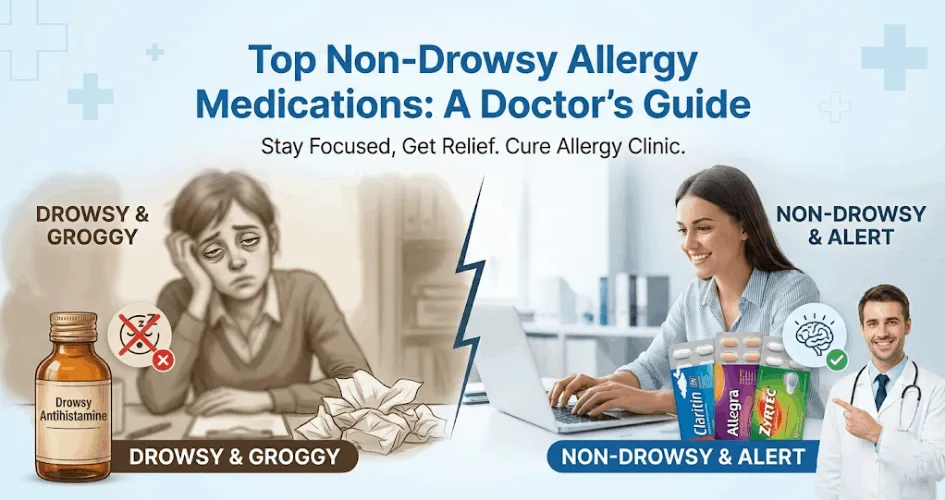
Allergy symptoms like sneezing, congestion, and itchy eyes can make it hard to stay focused at work, keep up in school, or get through daily tasks. Many people reach for allergy medicine only to find themselves feeling groggy, slowed down, or unable to concentrate. This concern about sleepiness is one of the most common reasons patients hesitate to take allergy medication consistently.
This guide explains how non-drowsy allergy medications work, which options are commonly recommended, and how to choose one that fits your lifestyle. Instead of guessing through trial and error, understanding the differences between medications and getting guidance from an allergy specialist can lead to safer and more effective symptom control.
What Makes an Allergy Medication Non-Drowsy
Antihistamines work by blocking histamine, a chemical released by the immune system during an allergic reaction. Histamine is responsible for symptoms like sneezing, runny nose, itchy eyes, and nasal congestion.
Older, first-generation antihistamines were effective at reducing symptoms but often caused drowsiness because they easily crossed into the brain and affected alertness. Newer, second-generation antihistamines were designed to target allergy symptoms more selectively, reducing their impact on the central nervous system. These medications are commonly labeled as non-drowsy or non-sedating because they are much less likely to cause sleepiness for most people.
Understanding Drowsiness and Allergy Medications
Some antihistamines can cross the blood-brain barrier and interfere with alertness, reaction time, and focus. This can raise concerns about driving safety, work performance, and learning, especially for people who need to stay mentally sharp throughout the day.
It is important to understand that non-drowsy does not mean identical for everyone. Individual sensitivity, dosage, timing, and other medications can all influence how someone responds. This is why personal response matters when selecting an allergy medication.
Top Non-Drowsy Allergy Medications
This section reviews commonly recommended non-drowsy allergy medications used for daytime symptom relief.
Loratadine (Claritin)
Loratadine is a second-generation antihistamine that blocks histamine without strongly affecting the brain. It is commonly used for seasonal and indoor allergies. Many people find loratadine helpful for daytime symptom relief with minimal risk of drowsiness. It is typically taken once daily and provides long-lasting control for sneezing, runny nose, and itchy eyes.
Fexofenadine (Allegra)
Fexofenadine is often considered one of the least sedating antihistamines available. It has a very low likelihood of causing drowsiness, which makes it a popular option for work, school, and driving. This medication begins working relatively quickly and is effective for controlling allergy symptoms throughout the day. It is often recommended for people who have experienced sleepiness with other allergy medicines.
Cetirizine (Zyrtec)
Cetirizine is known for strong effectiveness in relieving allergy symptoms, including nasal congestion and itchy eyes. While it is classified as non-drowsy, a small percentage of people may still experience mild sleepiness. Cetirizine may be appropriate for individuals whose symptoms are not well controlled with other options, especially when taken in the evening rather than during the day.
Levocetirizine and Desloratadine
Levocetirizine and desloratadine are newer antihistamines that offer effective symptom control with generally good tolerability. They are sometimes recommended for patients who need consistent relief and have not responded well to other medications. These options may be considered based on symptom severity, response to prior treatments, and individual sensitivity.
Claritin vs Zyrtec vs Allegra
When comparing loratadine, cetirizine, and fexofenadine, effectiveness for allergic rhinitis is generally similar, but differences exist in drowsiness risk and personal response.
Loratadine and fexofenadine are less likely to cause sleepiness, while cetirizine may cause mild drowsiness in some individuals. All three are usually taken once daily, but fexofenadine is often favored for people who need to stay alert during the day. The best choice depends on symptom severity, lifestyle needs, and how the body responds.
Choosing the Right Non-Drowsy Allergy Medication
Selecting the right allergy medication depends on daily activities and symptom patterns. People working long hours, attending school, or driving regularly often prioritize medications with the lowest risk of drowsiness.
Seasonal allergies triggered by pollen may respond differently than indoor allergies caused by dust mites or pet dander. Some people prefer once-daily dosing for convenience, while others may need faster-acting relief during peak symptom times. An allergist can help tailor the choice to individual needs.
Common Side Effects and What to Watch For
Even non-drowsy allergy medications can cause mild side effects such as dry mouth, headache, or stomach discomfort. In rare cases, drowsiness may still occur. Alcohol, certain supplements, and other medications can increase side effects. Because each person reacts differently, monitoring how you feel after starting a new medication is important.
Why Some Allergy Medications Stop Working
Allergy symptoms can change over time due to new triggers, increased exposure, or incorrect medication selection. Some medications may not address the specific type of allergy involved. When symptoms persist despite proper use of medication, it may indicate the need for allergy testing or long-term treatment strategies rather than continued medication changes.
When to See a Doctor for Allergy Symptoms
Persistent symptoms despite medication, frequent sinus issues, or side effects that interfere with daily life are signs it may be time to see a doctor. Chronic allergic rhinitis or symptoms that last year-round often benefit from professional evaluation.
An allergist can determine whether additional testing or advanced treatment options are appropriate.
How an Allergy Specialist Helps Optimize Treatment
An allergy specialist can identify specific triggers through allergy testing and help select medications that provide relief without unwanted side effects. In some cases, long-term treatments such as allergy shots or sublingual drops may be recommended.
At Cure Allergy Clinic, patients receive personalized care from experienced specialists like Dr. Waseem Imam. The clinic offers allergy testing, medication management, allergy shots, and allergy drops, with locations serving Keller, Arlington, and Mansfield. This approach helps patients move beyond symptom control toward long-term relief.