

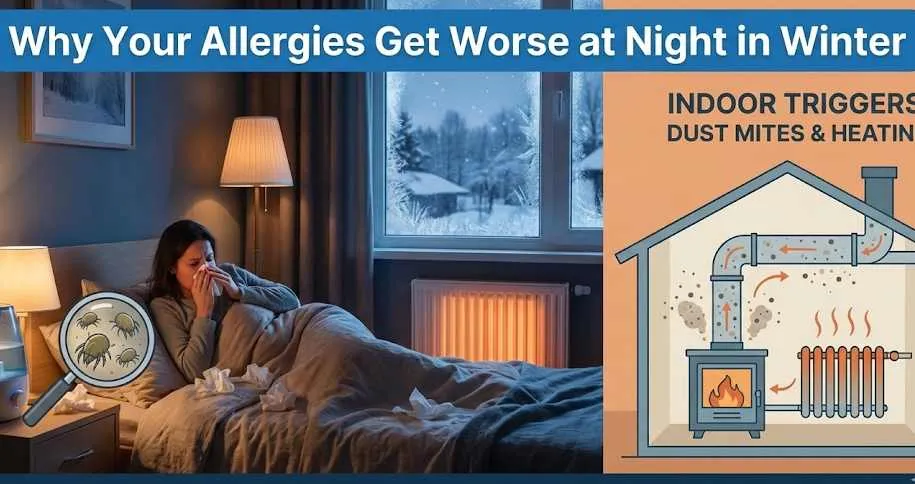
Many people notice that their allergy symptoms feel tolerable during the day but become noticeably worse at night during winter. Congestion builds as soon as they lie down, sneezing fits appear at bedtime, and itchy eyes or coughing interrupt sleep. This pattern often leaves people wondering why their allergies seem to flare up only at night. Night-time winter allergies are rarely caused by outdoor pollen. In colder months, indoor triggers become the dominant problem. Dust mites, bedding allergens, and home heating systems create an environment where allergens concentrate overnight. At Cure Allergy Clinic our specialist Dr Waseem Imam see this pattern every winter across North Texas, especially in cities like Keller, Arlington, and Mansfield, where patients report worsening symptoms after dark.
Why Allergies Often Get Worse at Night
Allergy symptoms intensify at night because of natural changes in the body combined with environmental exposure. During night-time hours, the immune system becomes more reactive. Inflammatory chemicals involved in allergic responses are released more actively while the body is at rest. This makes nasal tissues swell more easily and increases sensitivity to allergens.
Lying down also plays a major role. When you move from standing to a horizontal position, gravity no longer helps drain mucus from the sinuses. Allergens remain in contact with the nasal passages longer, which worsens congestion and postnasal drip. Reduced airflow during sleep further limits allergen clearance, allowing irritation to build throughout the night.
Why Winter Makes Nighttime Allergies Worse
Winter changes how and where people spend their time, which directly affects allergy symptoms. Colder temperatures keep people indoors with windows closed, leading to higher concentrations of indoor allergens. Unlike spring allergies, which are driven by outdoor pollen exposure during the day, winter allergies are continuous and prolonged because exposure occurs all night long.
Heating systems dry the air inside homes. Dry indoor air irritates nasal passages, making them more inflamed and reactive. This is why winter allergy symptoms often feel heavier, more congestive, and more persistent compared to seasonal allergies in warmer months.
Dust Mites and Nighttime Allergies
Dust mites are one of the most common causes of nighttime allergy symptoms, especially in winter.
Dust mites are microscopic organisms that thrive in warm, indoor environments. They live in mattresses, pillows, blankets, carpets, and upholstered furniture, feeding on shed skin cells. Because people spend several uninterrupted hours in bed, exposure to dust mite allergens peaks at night.
Symptoms linked to dust mite allergies include nasal congestion, sneezing, itchy or watery eyes, coughing, sinus pressure, and disrupted sleep. Winter conditions allow dust mites to thrive because heating systems maintain warm indoor temperatures while limiting ventilation.
Heating Systems and Indoor Air Quality
Home heating systems can significantly worsen nighttime allergy symptoms by affecting indoor air quality. Forced air heating circulates dust, pet dander, and allergen particles throughout the home. Over time, HVAC systems accumulate debris that is redistributed each time the heat turns on. Bedrooms located near heating vents often experience higher allergen exposure. Heating also lowers indoor humidity. Dry air irritates nasal tissues and increases inflammation, making allergy symptoms more noticeable. This combination of allergen circulation and airway irritation makes nighttime symptoms worse during winter.
Common Nighttime Allergy Symptoms in Winter
Nighttime winter allergies often present with a predictable group of symptoms that worsen after lying down. These include nasal congestion and blocked sinuses, sneezing and itchy eyes at night, postnasal drip with coughing, sinus pressure or headaches, and frequent sleep disruption that leads to daytime fatigue.
Why Allergies May Only Appear at Night
Some people experience allergy symptoms almost exclusively at night because allergen exposure becomes concentrated in the bedroom environment.
During the day, movement and ventilation reduce allergen contact. At night, prolonged exposure to bedding allergens, reduced airflow, and lying flat allow symptoms to return quickly. Because these symptoms resemble colds or sinus infections, nighttime allergies are often misdiagnosed or ignored.
How to Reduce Nighttime Allergies in Winter
Reducing nighttime allergy symptoms requires addressing both bedroom allergens and indoor air conditions.
Bedroom Environment Changes
Using allergy-proof mattress and pillow covers creates a barrier between dust mites and the airway. Washing bedding weekly in hot water removes accumulated allergens. Reducing carpets, heavy curtains, and excess fabric limits dust buildup. Keeping pets out of the bedroom also decreases nighttime exposure.
Managing Indoor Air
Humidifiers can help restore moisture to dry winter air, but humidity should remain balanced to prevent mold growth. Regular HVAC filter changes improve air circulation and reduce allergen spread. Routine dust control and proper ventilation further support healthier indoor air.
When Nighttime Allergies Need Medical Attention
Medical evaluation is recommended when symptoms persist despite environmental changes. Nighttime congestion that consistently disrupts sleep, chronic coughing, frequent sinus infections, or symptoms that last throughout the winter may indicate allergic rhinitis or dust mite sensitivity.
If over-the-counter medications provide only temporary relief or symptoms worsen year after year, allergy testing becomes an important next step.
How an Allergy Specialist Can Help
An allergy specialist can identify specific triggers through testing and determine whether symptoms are caused by dust mites, indoor allergens, or other conditions. Proper diagnosis helps distinguish allergies from sinus infections or respiratory illnesses.
At Cure Allergy Clinic, patients receive comprehensive allergy care including diagnostic testing, medication management, allergy shots, and allergy drops. Under the care of Dr. Waseem Imam, personalized allergy treatment plans focus on long-term relief rather than seasonal symptom suppression. Cure Allergy Clinic serves patients in Keller, Arlington, and Mansfield, offering expert care for persistent nighttime and winter allergies.