

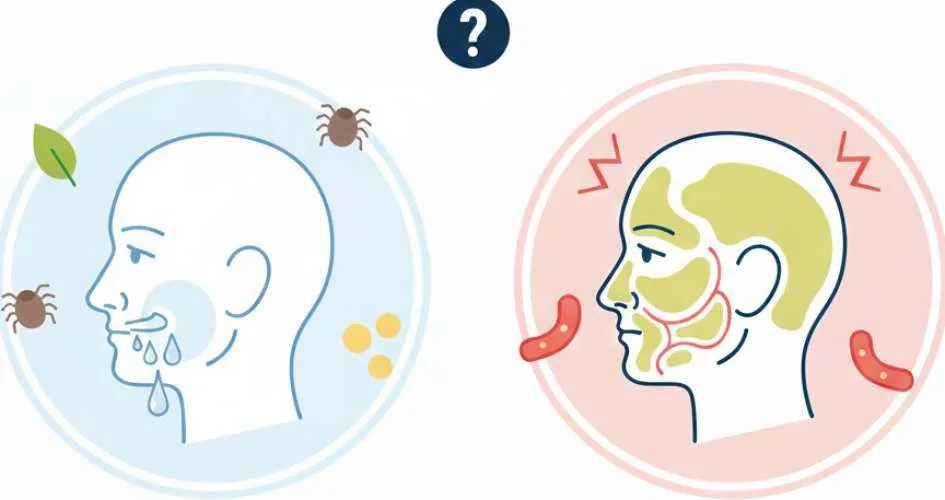
Throat drainage, constant coughing, pressure in the face, or a lingering sore throat can be uncomfortable and frustrating. Many people struggle to tell whether these symptoms are caused by post-nasal drip or a sinus infection, especially when both can feel very similar at first.
Post-nasal drip and sinus infections are two different conditions with different causes, timelines, and treatments. Understanding the difference matters because treating the wrong condition can delay relief and allow symptoms to worsen. This guide explains how post-nasal drip and sinus infections differ, what symptoms to watch for, how long each typically lasts, and when it is time to see a healthcare provider for proper evaluation.
What Is Post-Nasal Drip
Post-nasal drip occurs when excess mucus builds up in the nasal passages and drains down the back of the throat. While mucus production is normal and helps trap dust and germs, problems arise when too much mucus is produced or when it becomes thicker than usual.
When this drainage constantly irritates the throat, it can cause frequent throat clearing, coughing, and a sensation of mucus stuck in the throat. Post-nasal drip is not an infection itself, but rather a symptom caused by irritation or inflammation in the nasal passages.
Many people notice post-nasal drip more at night, when lying down allows mucus to pool in the throat, making symptoms feel worse during sleep.
Common Causes of Post-Nasal Drip
Post-nasal drip can develop from several underlying triggers, most of which involve irritation rather than infection.
Seasonal and environmental allergies are one of the most common causes. Allergic rhinitis leads to increased mucus production in response to pollen, dust mites, mold, or pet dander.
Viral colds can also trigger post-nasal drip. Even after other cold symptoms improve, lingering inflammation can keep mucus production elevated for days or weeks.
Dry air, smoke, strong odors, and temperature changes may thicken mucus and slow normal drainage. Acid reflux can also irritate the throat and nasal passages, worsening the sensation of drainage.
The duration of post-nasal drip depends on its cause. Allergy-related drainage may last weeks or months, while viral-related post-nasal drip often improves gradually within one to two weeks.
What Is a Sinus Infection
A sinus infection, also called sinusitis, occurs when the sinus cavities become inflamed and blocked, preventing normal mucus drainage. When mucus becomes trapped, it creates pressure and discomfort within the sinuses.
Sinus infections may be viral or bacterial. Viral sinus infections often follow a cold and typically improve on their own. Bacterial sinus infections are less common but may develop when symptoms worsen or persist.
Sinus infections are often categorized as acute or chronic. Acute sinusitis usually lasts less than four weeks, while chronic sinusitis involves symptoms that persist for several months or recur frequently.
Unlike post-nasal drip, sinus infections involve inflammation within the sinus cavities themselves rather than just excess drainage.
Common Sinus Infection Symptoms
Sinus infection symptoms tend to involve deeper pressure and pain compared to post-nasal drip.
Many people experience facial pain or pressure, particularly around the cheeks, forehead, or behind the eyes. Thick nasal mucus that appears yellow or green may be present, along with nasal congestion.
Sinus headaches, fatigue, reduced sense of smell, and pressure that worsens when bending forward are common. Some individuals also experience fever or bad breath.
A sore throat can occur with sinus infections, but it is usually caused by thick drainage rather than surface throat irritation alone.
Post-Nasal Drip vs Sinus Infection: Key Differences
Although these conditions share overlapping symptoms, several features help distinguish one from the other.
Mucus and Drainage Differences
Post-nasal drip usually involves thin, clear mucus that constantly drains into the throat. Sinus infections more often produce thick mucus that may appear yellow or green and feel stuck in the nasal passages.
Pain and Pressure Differences
Post-nasal drip primarily causes throat irritation, coughing, and frequent clearing. Sinus infections typically cause facial pain, sinus pressure, and discomfort around the eyes or teeth.
Duration and Symptom Progression
Post-nasal drip may fluctuate throughout the day and often improves with allergy control or environmental changes. Sinus infection symptoms often worsen over time and may last longer than ten days without improvement.
Can Post-Nasal Drip Turn Into a Sinus Infection
Post-nasal drip does not automatically lead to a sinus infection, but prolonged nasal inflammation can increase the risk.
When swelling blocks sinus drainage, mucus can become trapped inside the sinuses. This environment may allow bacteria to grow, especially if symptoms persist or worsen.
Early management of nasal congestion and inflammation can reduce the likelihood of sinus complications.
How Each Condition Is Treated
Treatment depends on identifying the underlying cause rather than simply addressing symptoms.
Post-Nasal Drip Treatment
Managing post-nasal drip often involves saline nasal sprays, adequate hydration, and controlling allergy triggers. Allergy medications may help when allergic rhinitis is the cause.
Reducing exposure to irritants, using humidifiers in dry environments, and addressing acid reflux can also improve symptoms.
Sinus Infection Treatment
Viral sinus infections usually resolve with supportive care such as saline rinses, decongestants, and rest. Antibiotics are only considered when bacterial infection is suspected.
Not all sinus infections require antibiotics, and unnecessary use can lead to side effects without improving recovery.
When to See a Doctor for Sinus or Drainage Symptoms
Medical evaluation is recommended when symptoms persist longer than expected or interfere with daily life.
Seek care if facial pain becomes severe, symptoms last more than ten days without improvement, fever develops, or sinus pressure worsens. Chronic post-nasal drip without a clear cause may also benefit from further evaluation. Specialists at clinics such as Cure Allergy Clinic, serving Keller, Arlington, and Mansfield, often help differentiate allergy-related drainage from sinus infections through proper testing and examination.