

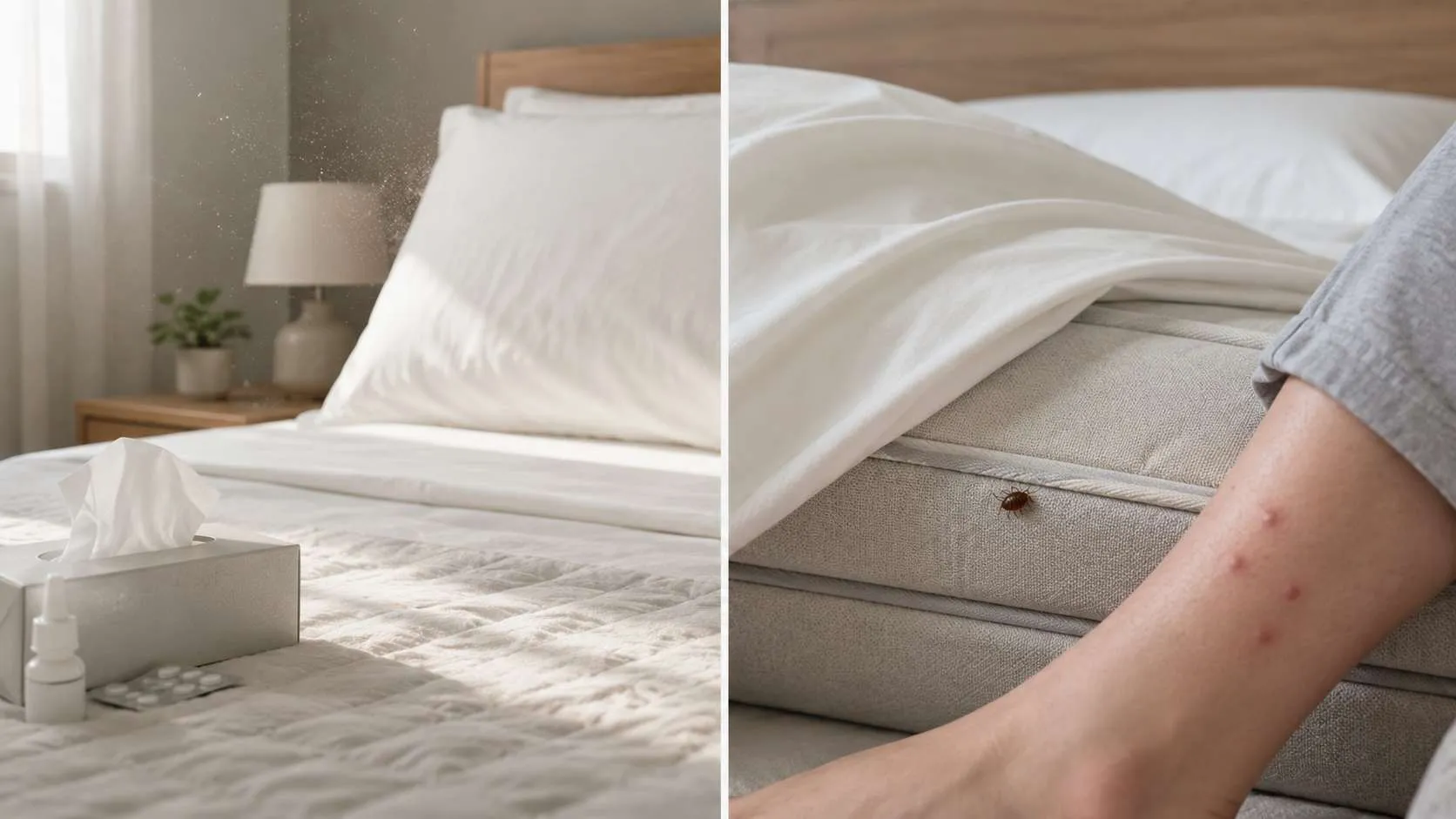
Waking up with itchy skin, red bumps, or irritation during the night can immediately trigger panic. Many people assume they have bed bugs the moment they notice a rash on their arms, legs, or back. Others spend weeks cleaning mattresses, replacing bedding, or throwing away furniture without realizing the real issue may actually be a dust mite allergy. The confusion between dust mite allergy vs bed bug bites is extremely common because both conditions can cause nighttime itching, skin irritation, and poor sleep quality that affects work, energy levels, and daily comfort.
Most people initially try over-the-counter creams, allergy pills, or home cleaning solutions to control symptoms. But when rashes continue appearing at night or symptoms spread beyond the skin into sneezing, congestion, coughing, or eczema flare-ups, patients often start looking for expert answers. Understanding the difference between dust mites vs bed bugs is important because the treatment approach is completely different. One is an allergic immune response, while the other involves actual insect bites.
At Cure Allergy Clinic, our specialists help patients identify the true cause behind chronic nighttime irritation through advanced allergy testing, personalized allergy treatment plans, and long-term management options. Whether symptoms are caused by dust mite allergies, eczema, or another allergic trigger, our team helps patients across Texas find accurate answers and long-term relief.
Dust Mite Allergy vs Bed Bug Bites: What Is the Difference?
The biggest misunderstanding is that dust mites bite humans. They do not.
Many people searching “do dust mites bite” or “do dust mites actually bite you” are surprised to learn that dust mites are microscopic allergens, not biting insects. Dust mites feed on dead skin cells and live inside mattresses, pillows, carpets, upholstery, and bedding.
Bed bugs, on the other hand, are visible parasitic insects that feed on blood through actual bites.
Key Difference Between Dust Mites and Bed Bugs
Do Dust Mites Bite?
No, dust mites do not bite humans.
This is one of the biggest myths surrounding dust mites vs bed bugs. Dust mites are too small to bite and survive by feeding on skin flakes rather than blood.
However, dust mite allergy rash can absolutely make it feel like something is biting you during the night.
Why Dust Mite Allergies Cause Skin Irritation
The allergic reaction happens because your immune system reacts to:
This can trigger:
Some patients searching “can dust mites cause hives at night” are actually experiencing allergic inflammation rather than insect bites.
What Does a Dust Mite Allergy Rash Look Like?
A dust mite allergy rash usually appears as widespread irritation instead of isolated bites.
Common Dust Mite Allergy Symptoms
Unlike bed bug bites, dust mite allergy rash often appears alongside respiratory symptoms.
Patients may also experience:
People with underlying eczema often experience stronger reactions to dust mite exposure because the skin barrier is already inflamed.
What Do Bed Bug Bites Look Like?
Bed bug bites tend to follow a more recognizable pattern.
Common Signs of Bed Bug Bites
This bite pattern identification is one of the clearest ways to separate bed bugs from dust mite allergies.
If you woke up with bites, the pattern matters:
Woke Up With Bites: Is It Bed Bugs or Dust Mites?
Many people panic after waking up with red bumps on skin at night. But appearance alone is not always enough for diagnosis.
Signs It May Be Dust Mites
Signs It May Be Bed Bugs
Understanding nocturnal skin irritation causes requires looking at the entire symptom picture, not just the rash itself.
Bed Bug Bites vs Eczema vs Dust Mite Allergy
This is where many patients become confused.
Eczema
Eczema typically causes:
Dust Mite Allergy
Dust mite allergy symptoms often include:
Bed Bug Bites
Bed bug bites usually involve:
Patients frequently mistake allergic dermatitis dust mites for bed bug infestations because both conditions worsen during sleep.
How to Tell If Rash Is From Dust Mites
You should suspect dust mites if:
Many patients searching “how do I know if I have dust mite allergy or bed bugs” need professional testing because symptoms can overlap significantly.
Do I Need Allergy Testing for Dust Mite Rash?
If symptoms continue despite cleaning efforts or bug treatments, allergy testing becomes important.
Professional dust mite allergy testing can confirm whether your immune system is reacting to dust mites and other indoor allergens.
Testing may help identify:
Patients dealing with chronic nighttime symptoms often benefit from understanding why allergy symptoms get worse at home.
Should I See an Allergist for Dust Mite Rash?
You should see an allergist if:
If you are searching for an allergist in Mansfield TX or looking for allergy testing in Dallas, professional evaluation can prevent months of unnecessary stress and incorrect treatment.
Dust Mite Immunotherapy After Diagnosis
For patients with confirmed dust mite allergies, long-term treatment may include immunotherapy.
Allergy Shots
Allergy shots gradually train the immune system to become less reactive to allergens over time.
Sublingual Allergy Drops
Sublingual allergy drops offer a needle-free alternative that many patients prefer for long-term allergy management.
Benefits of immunotherapy may include:
Conclusion
Understanding the difference between dust mite allergy vs bed bug bites is critical because the causes and treatments are completely different. Dust mites do not bite humans, but they can trigger powerful allergic reactions that mimic insect bites, eczema, or hives.
If your nighttime skin irritation keeps returning, especially alongside sneezing, congestion, or respiratory symptoms, allergy testing may provide clearer answers than repeatedly treating for bed bugs. At Cure Allergy Clinic, our specialists help patients identify the real source behind chronic allergy symptoms and create personalized treatment plans for long-term relief.