

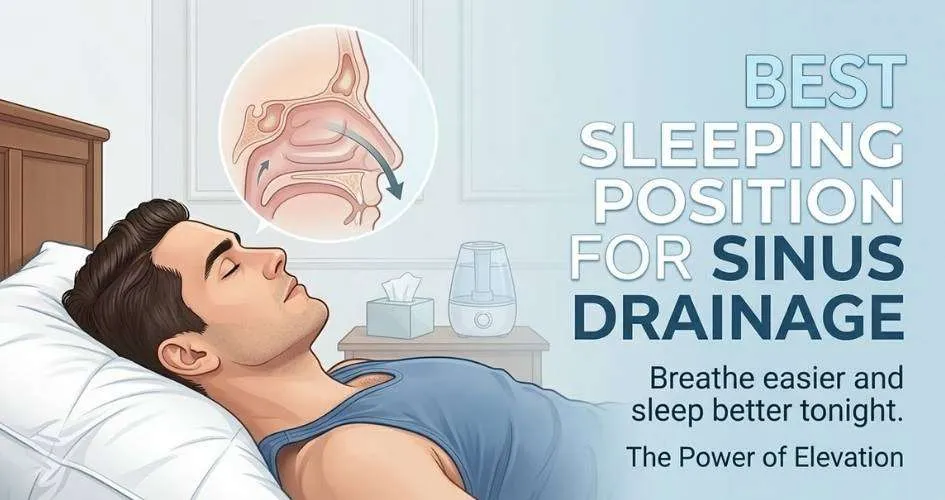
Finding the best sleeping position for sinus drainage can mean the difference between waking up refreshed and spending the night tossing, turning, and gasping for air. If you have ever lain down only to feel your face fill with pressure, your nose completely shut down, and a constant drip tickling the back of your throat — you already understand how badly sinus congestion at night steals your rest.
You are not alone. Millions of people deal with sinus pressure when lying down every single night. What makes it so frustrating is that simply lying down triggers it — your own sleeping position working against you.
At Cure Allergy Clinic in Mansfield, TX, Dr. Waseem Imam and the clinical team help patients find lasting relief from sinus and allergy conditions. Rather than managing symptoms every night, they identify and treat the root cause.
In this blog, we cover why nighttime sinus congestion happens, which sleeping positions actually help, and five practical tips you can use tonight.
Why Does Sinus Congestion Get Worse at Night?
During the day, gravity quietly helps mucus drain out of your sinus cavities while you stay upright. The moment you lie flat, that drainage stops entirely. Mucus pools inside your nasal passages. Pressure builds. Airflow gets restricted. This is the core reason sinus pressure when lying down feels so much more intense than daytime congestion.
What Else Makes It Worse at Night
Beyond gravity, several other factors intensify sinus congestion at night:
Identifying your personal trigger is the first step toward real, lasting sinus relief at night.
Elevate Your Head
The single most effective sleeping position for sinus drainage is keeping your head elevated above your heart. Elevation brings gravity back on your side — mucus drains more freely, sinus pressure drops, and nasal passages stay more open through the night.
Simple ways to elevate:
Even a modest elevation makes a real difference. This remains the best way to sleep with sinus congestion regardless of whether the cause is allergies, a cold, or a sinus infection.
Sleep on Your Side
Side sleeping is another effective option. It prevents mucus from pooling evenly across both nasal passages and keeps at least one airway more open. Combine side sleeping with head elevation for the strongest result. Many people find sleeping on the side opposite their most blocked nostril provides faster relief.
Avoid Sleeping Flat on Your Back
Sleeping completely flat is the worst position for anyone dealing with sinus pressure when lying down.
How to Sleep With a Sinus Infection
A sinus infection — clinically called sinusitis — adds active inflammation on top of regular congestion. Nasal tissues swell more, mucus thickens, and sinus infection sleep problems become significantly harder to manage.
These steps together can meaningfully reduce discomfort:
Tip 1 — Shower With Warm Water Before Bed
Steam loosens thick mucus and opens nasal passages quickly. One of the most effective natural sinus drainage at night strategies — and completely free.
Tip 2 — Run a Humidifier
Keep bedroom humidity between 40–50%. Moist air soothes inflamed nasal tissue and supports natural overnight drainage.
Tip 3 — Rinse With Saline
A saline rinse physically clears allergens and mucus from nasal passages right before sleep. Always use distilled or previously boiled water — never tap water.
Tip 4 — Stay Hydrated All Day
Adequate daily hydration keeps mucus thin and moving. This directly supports how to drain sinuses while sleeping by maintaining active drainage through the night.
Tip 5 — Apply a Warm Compress
Place a warm, damp cloth over your nose and cheeks for several minutes before bed. The heat reduces facial pressure and encourages mucus to loosen and move.
When Should You See a Doctor For Sinus Congestion?
Occasional sinus congestion is normal and usually resolves quickly. However, some symptoms signal something that home remedies cannot fix.
Seek medical evaluation if you notice:
Chronic symptoms are frequently driven by an underlying allergy or structural nasal issue that requires proper clinical assessment.
At Cure Allergy Clinic in Mansfield, TX, Dr. Waseem Imam provides comprehensive allergy testing Mansfield, TX and personalized immunotherapy — including allergy shots and sublingual (under-the-tongue) allergy drops — to treat the root cause of your sinus problems rather than masking them temporarily.
Conclusion
The best sleeping position for sinus drainage head elevated, ideally combined with side sleeping is one of the most effective and immediate tools available to you tonight. Paired with the sinus drainage tips covered above, most people experience real sinus relief at night without reaching for medication.
But if sinus congestion at night keeps returning night after night, it is your body signaling that something deeper needs attention. The team at Cure Allergy Clinic Mansfield is ready to help you find that cause and treat it properly so the best sleeping position for sinus drainage becomes the first step toward a permanent solution, not just a nightly habit.